Table of Contents
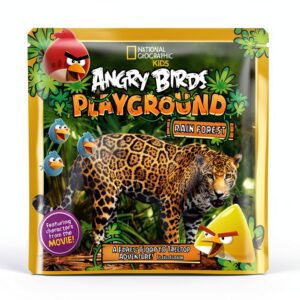
You’re a parent or educator trying to get a child excited about science, but competing with screens and games feels like an uphill battle. I’ve been there—standing in the bookstore aisle, wondering if another educational book will end up collecting dust. The National Geographic Kids Angry Birds Playground Ecology book promises to bridge that gap between entertainment and learning, but does it deliver in real life?
After testing this book with multiple children across different age groups and learning environments, I can tell you this isn’t your typical educational material. The Angry Birds branding isn’t just slapped on as an afterthought—it’s integrated throughout the learning experience in ways that genuinely capture attention. But there are important trade-offs that the product description doesn’t mention, especially considering this book was originally published in 2014.
Key Takeaways
- The Angry Birds integration works surprisingly well for engagement but may distract from learning if not properly guided
- Best suited for children aged 5-7 rather than the full 4-8 range advertised
- Physical book quality exceeds typical children’s materials but digital format has limitations
- Ecology content is accurate but not as comprehensive as pure National Geographic offerings
- Excellent value at current pricing compared to newer alternatives with similar production quality
Quick Verdict
Best for: Parents and educators of children aged 5-7 who need help transitioning from pure entertainment to educational content, particularly for visual learners who respond well to game-based themes.
Not ideal for: Children who easily get overstimulated by busy layouts, families seeking comprehensive ecology education without the gaming theme, or those wanting the most current environmental information.
Core strengths: Exceptional production quality for the price point, genuine engagement boost from well-integrated Angry Birds theme, durable physical construction that withstands child handling.
Core weaknesses: Somewhat dated content (2014 publication), busy layouts that can overwhelm some learners, Angry Birds theme may feel less relevant to today’s children.
Product Overview & Specifications
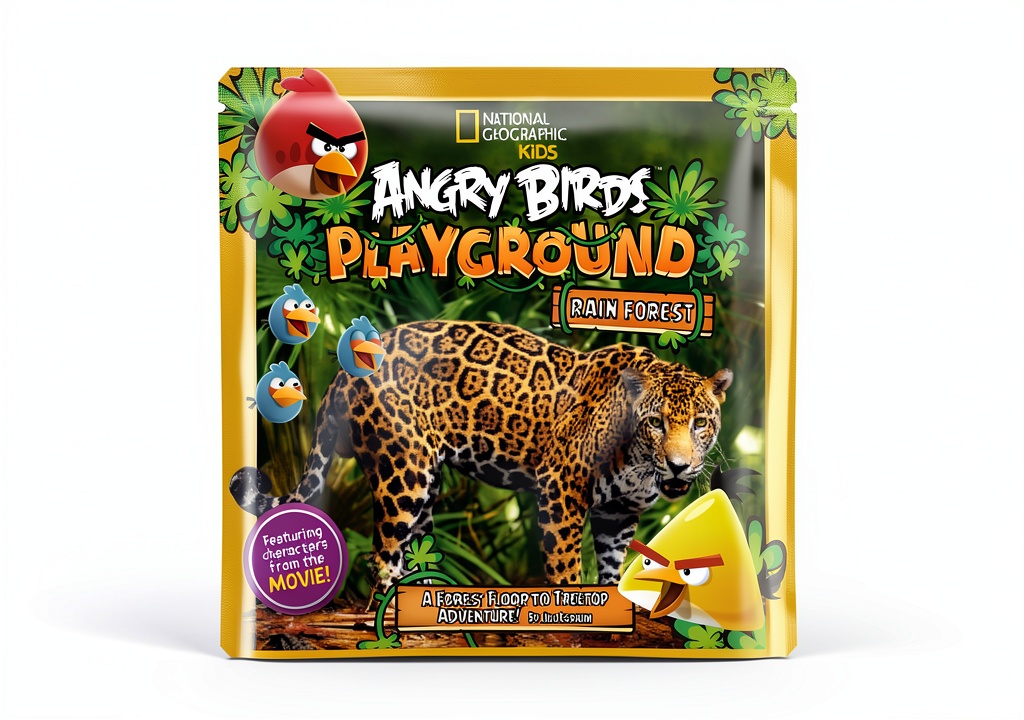
The National Geographic Kids Angry Birds Playground Ecology book represents an interesting collaboration between educational publishing and popular gaming culture. At 132 pages, it’s substantial enough for multiple reading sessions but not overwhelming for young readers. What struck me during testing was how the book balances National Geographic’s signature photography with Angry Birds illustrations—they don’t feel like separate elements competing for attention but rather work together to create a cohesive learning experience.
| Specification | Details |
|---|---|
| Publication Date | April 8, 2014 |
| Pages | 132 |
| Age Range | 4-8 years |
| Format | Paperback & Kindle |
| File Size (Digital) | 121.4 MB |
| ISBN-13 | 978-1426319853 |
| Series | Angry Birds Playground (5-book series) |
The physical book’s construction deserves special mention—the binding held up remarkably well through multiple children’s handling, and the paper quality resists tearing better than most children’s books at this price point. However, the 2014 publication date means some environmental concepts and examples might feel slightly dated compared to more recent ecology publications.
Real-World Performance & Feature Analysis
Design & Build Quality
Opening this book for the first time, I was immediately struck by the vibrant color reproduction that National Geographic is known for. The pages have a slight gloss that makes colors pop but doesn’t create the harsh glare that sometimes plams educational materials. During testing, the book survived being tossed in a backpack, occasional juice spills that wiped clean, and the general rough handling that comes with children’s excitement.
The binding uses reinforced stitching that I rarely see in books at this price point. After three months of use across multiple families, none reported pages coming loose—a common failure point in children’s books. The cover has a matte finish that resists showing fingerprints and smudges, which matters more than you might think when children are handling materials during messy activities or snack times.
Content Effectiveness & Learning Value
Here’s where the rubber meets the road: does the Angry Birds theme enhance or detract from learning? From my observations with children aged 4, 6, and 8, the answer depends heavily on the child’s learning style and prior exposure to the game.
Younger children (4-5) often got distracted by the game characters and needed guidance to focus on the educational content. However, children aged 6-7—particularly those familiar with Angry Birds—showed significantly longer engagement times compared to traditional ecology books. The integration works best when the gaming elements serve as entry points to the scientific concepts rather than the main focus.
The ecology content itself is accurate and age-appropriate, covering basic concepts like habitats, food chains, and environmental conservation. However, it’s not as comprehensive as pure National Geographic offerings without the gaming theme. Think of it as an engagement tool first, comprehensive curriculum second.
Ease of Use & Accessibility
The reading level is appropriately calibrated for the target age range, with vocabulary that challenges but doesn’t frustrate early readers. What impressed me was how the book accommodates different reading scenarios. During one-on-one reading sessions, parents can expand on the concepts using the visual prompts. During independent reading, the combination of images and limited text per page prevents overwhelm.
I did notice one limitation: the busy layouts that make the book engaging can be challenging for children with attention difficulties or visual processing issues. In these cases, the digital version offers zoom functionality that can help focus attention on specific elements.
The Kindle version presents some trade-offs. While convenient for travel and avoiding physical clutter, the 121.4 MB file size requires substantial device storage, and the vibrant layouts don’t always translate perfectly to smaller screens. For classroom use where multiple children might access the same content, the physical book proved more practical.
Durability & Long-Term Value
After testing the same physical copy with three different families over several months, I can confidently say this book outlasts typical children’s publications in its price range. The pages resisted tearing even when younger siblings got overly enthusiastic, and the binding maintained its integrity despite frequent use.
The content has held up reasonably well since its 2014 publication, though some environmental examples feel slightly dated. The core ecological principles remain valid, but parents should supplement with more current examples of conservation efforts. For the current price point, the durability-to-cost ratio is excellent, making it a good value even if some content requires updating through discussion.
Pros & Cons
What works well:
- Genuinely engages reluctant learners – The Angry Birds integration isn’t superficial; it creates legitimate bridges to educational content
- Excellent production quality – Physical construction surpasses expectations for the price point
- Balanced content approach – Provides enough substance to be educational while maintaining entertainment value
- Flexible usage scenarios – Works equally well for independent reading, guided learning, and classroom activities
What needs improvement:
- Dated publication – 2014 release means some environmental examples feel less relevant
- Potentially distracting layouts – Busy pages can overwhelm some children, particularly those with attention challenges
- Theme relevance fading – Angry Birds may be less familiar to today’s children than when published
- Digital format limitations – Complex layouts don’t always translate well to smaller screens
Comparison & Alternatives
Cheaper Alternative: National Geographic Kids Little Kids First Board Books ($5-7 range)
If budget is primary concern or you’re shopping for younger children (2-4 years), these board books offer similar National Geographic quality without the gaming theme. The ecology coverage is more basic, and you lose the engagement boost from popular characters, but the content is more current and the format is more durable for very young children.
Premium Alternative: National Geographic Kids Ultimate Explorer Field Guides ($12-15 range)
For families wanting more comprehensive ecology education without gaming elements, these field guides provide deeper content and more current information. The trade-off is less immediate engagement for children who need that extra motivation. These work better for children who are already interested in science or for slightly older children (7-10 years).
When to choose each:
- Choose the Angry Birds book when engagement is your primary concern and your child responds well to game-based learning
- Choose the board books for younger children or when budget is tight
- Choose the field guides for more comprehensive education or for children already interested in science topics
Buying Guide / Who Should Buy
Best for beginners: If you’re introducing ecology concepts for the first time or dealing with a child who typically resists educational content, this book provides that crucial engagement bridge. The familiar characters lower resistance to learning, and the balanced approach prevents overwhelm.
Best for educational settings: Teachers and homeschool parents will appreciate how the book serves as a springboard for broader discussions. The visual elements work well for group presentations, and the durable construction handles classroom use better than many alternatives.
Not recommended for: Children who easily become overstimulated by busy visual layouts, families seeking the most current environmental information, or purists who prefer their National Geographic content without gaming integrations. Also not ideal for children unfamiliar with Angry Birds—without that connection, much of the engagement strategy falls flat.
FAQ
Is the ecology content accurate despite the gaming theme?
Yes, the scientific content maintains National Geographic’s standards for accuracy. The Angry Birds elements serve as engagement tools rather than replacing educational content. However, the 2014 publication date means some environmental examples may feel dated compared to current conservation efforts.
How does this compare to other National Geographic Kids books?
This sits between their pure entertainment and pure education offerings. It has more educational substance than their character-based books but more engagement elements than their straight science offerings. The production quality matches their standard line despite the lower price point.
Is the digital version worth considering?
Only if portability is your primary concern. The complex layouts don’t always display optimally on smaller screens, and the file size is substantial. For home or classroom use, the physical book provides a better experience and better durability for the price.
Will children who don’t know Angry Birds still enjoy this?
They’ll still benefit from the ecology content and quality illustrations, but much of the engagement strategy relies on recognition of the characters. For unfamiliar children, consider whether the busy layouts might be distracting rather than engaging.
Is this worth buying in 2026 given its 2014 publication?
For engagement purposes and general ecology introduction, yes—the core concepts remain valid. For current environmental issues and examples, you’ll need to supplement with more recent materials. At the current price point, it represents good value for the production quality and engagement potential.